New Zealand has no separate capital gains tax, but that doesn't make crypto tax-free. Inland Revenue's view is that if you bought crypto for the purpose of selling or exchanging it, the profit is income, taxed at your normal rates. For most people it is, because a coin that pays no income is usually bought to be sold later at a higher price.
Why most buyers are taxed
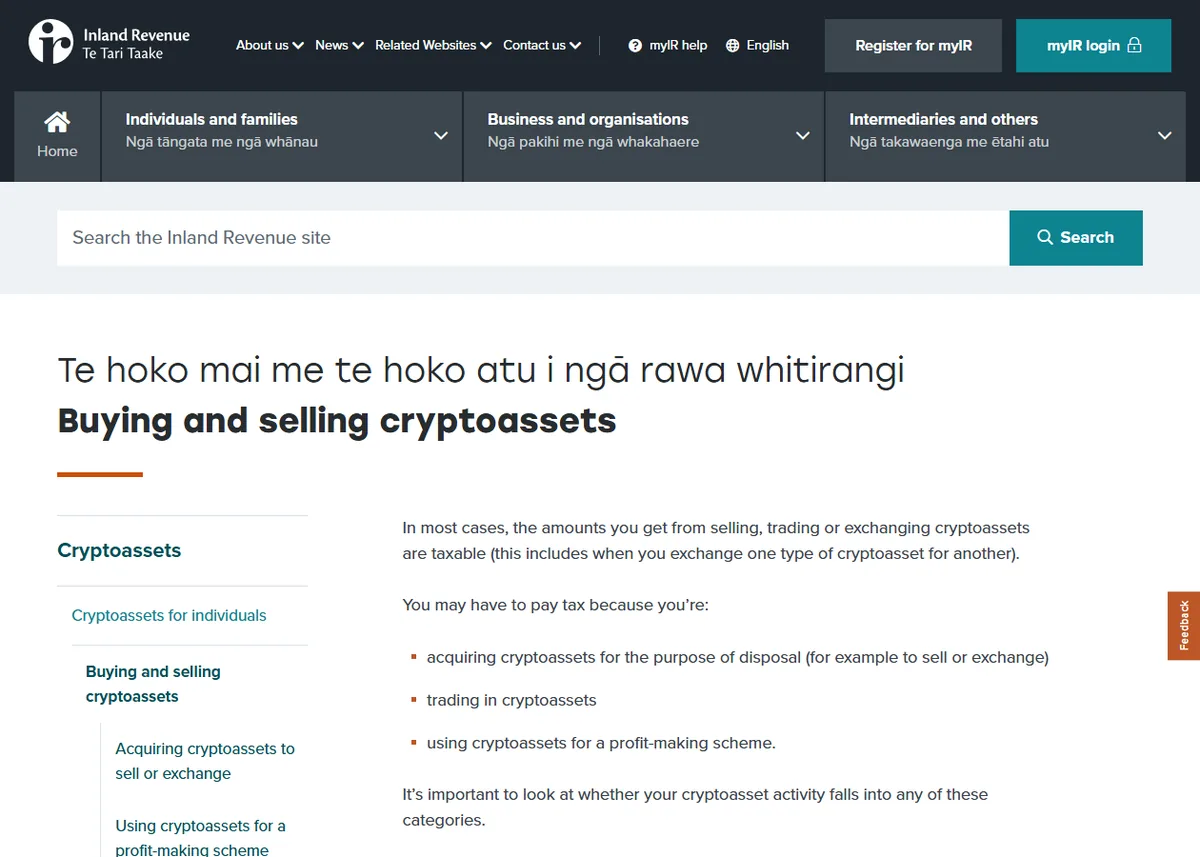
Inland Revenue looks at your main purpose when you acquired the coins. Shares pay dividends and property pays rent; most crypto pays nothing, which, in its words, strongly suggests you acquired it to sell or exchange. Staking rewards and other coins you're paid are income when you receive them.
What counts as a disposal:
- selling for dollars
- swapping for another coin (recorded as both a disposal and a new acquisition)
- spending crypto on goods or services
Working out the cost
Inland Revenue lists two methods for working out the cost of the coins you dispose of:
| Method | How it works |
|---|---|
| First-in, first-out (FIFO) | The coins you bought earliest are treated as sold first |
| Weighted average cost | Each coin's cost is the average of everything you hold |
Pick one that fits your records and stay with it; switching year to year to lower the bill invites questions. The calculator on this page runs both side by side so you can see how far apart they are before you choose.
Losses
If a profit on the coins would have been taxable, a loss usually is deductible. Inland Revenue says crypto losses can offset other crypto profits first, and then your other income.
Dates
| Tax year | 1 April to 31 March |
| IR3 due | 7 July |
| With a tax agent | Extension of time, up to 31 March the following year |
Valuing trades in New Zealand dollars
Exchange files usually show trades against USDT, not NZD. The calculator values those at 1 USD and converts with the ECB reference rate for that day, which is close enough to check your figures. When you file, use values you can support from your records.
Sources
- Inland Revenue, Acquiring cryptoassets to sell or exchange (30 August 2022)
- Inland Revenue, Buying and selling cryptoassets (30 August 2022)
- Inland Revenue, Calculating cryptoasset income (28 July 2026)
- Inland Revenue, Individual income tax return IR3 (24 September 2026)
- Inland Revenue, Extension of time arrangements (1 April 2026)
A tax agent can confirm whether Inland Revenue would treat your crypto profits as taxable income.