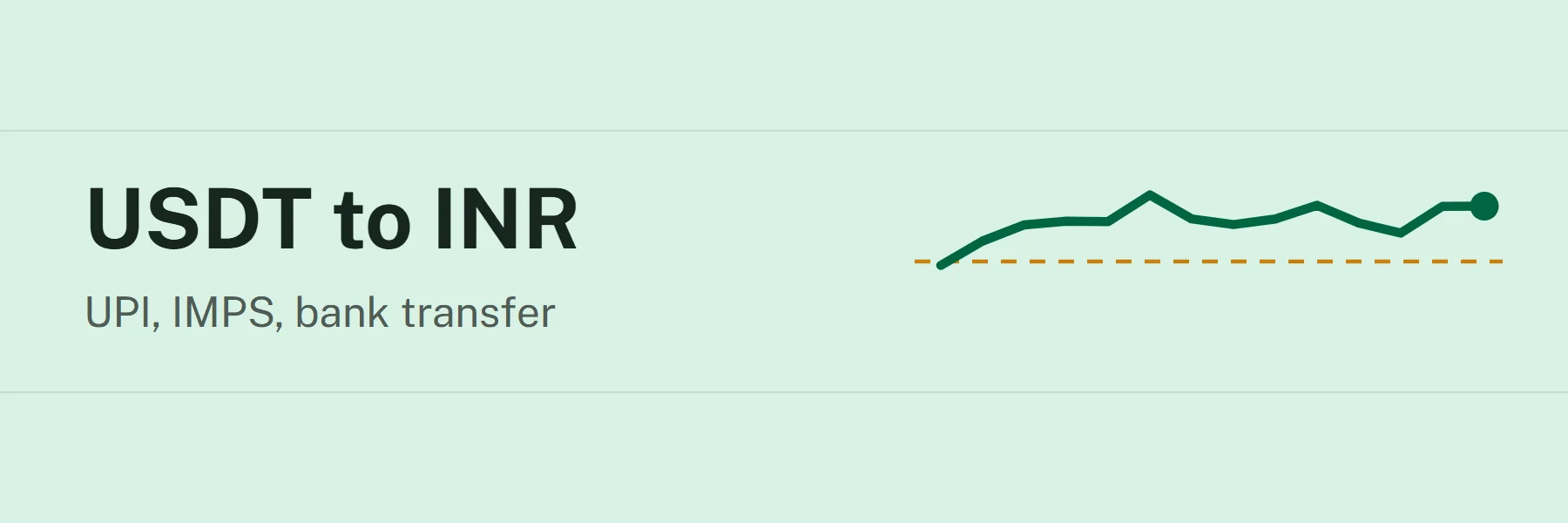
On Binance P2P in India you pay another user in rupees by UPI, IMPS or bank transfer, and their USDT is released to you from escrow once they confirm the payment. Prices sit several percent above the dollar rate (about 4.8% on 6 October 2026); the live USDT to INR page shows the current figure. The bigger risk in India isn't the price, it's your bank account being frozen because money in the chain turned out to be linked to a fraud complaint, so choosing sellers carefully matters more than saving a few paise.
The cheapest way to buy USDT in India
UPI and IMPS settle instantly and had the best prices on 6 October 2026 (₹100.99 from reliable sellers). Bank transfer covers NEFT and larger amounts. PhonePe, Google Pay and the Digital Rupee were about one rupee dearer that day.
How to buy USDT with UPI on Binance P2P
- Complete identity verification on Binance; P2P needs it. Our Binance sign-up guide covers the process. A referral code can only be added while the account is being opened, not afterwards.
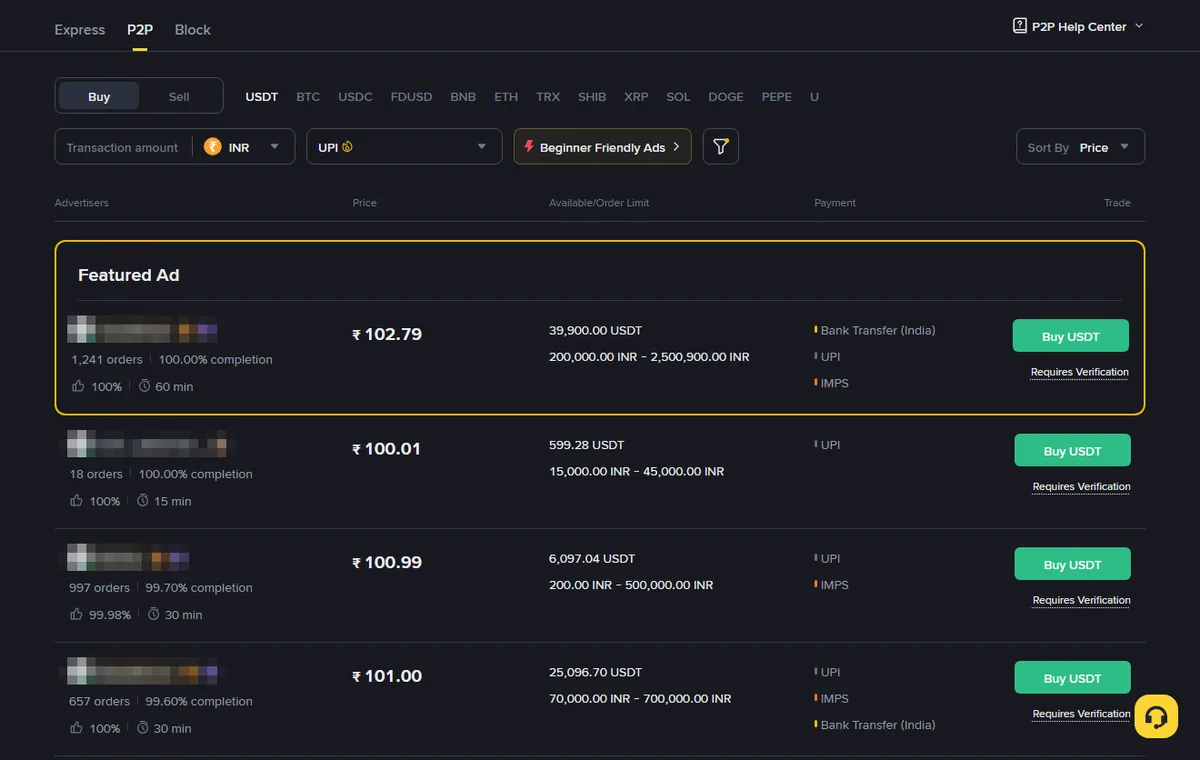
- In the app, tap Add Funds, then P2P Trading (on the website, open P2P). Choose Buy, USDT, INR, and filter by your payment method.
- Ignore the Featured Ad box unless its price really is the best; it's a paid placement. Choose a seller from the list (see below), check your amount is within their limits, and place the order. Some ads are marked Requires Verification and ask for extra checks before you can trade with them.
- Pay the exact amount from your own account to the UPI ID or bank details shown in the order. Don't write "crypto" or "USDT" in the remarks.
- Tap Transferred, Notify Seller only after the payment has gone through. Tapping it before paying breaks Binance's P2P rules and can get the account suspended.
- The USDT is released to your Spot account (older guides say Funding; Binance has been moving crypto from Funding into Spot since 29 September 2026). If it isn't, appeal from the order with your payment proof. Don't cancel a paid order: cancelling returns the USDT to the seller.
Lowering the risk of a P2P bank account freeze
Freezes happen when money that passed through a P2P trade is later traced to a fraud complaint. You can't fully control that, but you can lower the odds:
- trade with sellers who have a long record and a completion rate close to 100%; our live page only counts advertisers with at least 30 completed orders and 95% completion in 30 days
- be wary of prices better than everyone else's, especially from accounts with few orders, like the ₹100.01 ad in the screenshot
- when selling, accept payment only from an account in the buyer's own name, and don't release until the credit shows in your own banking app
- keep your order records and payment receipts; they're what you'll need if your bank asks where the money came from
If an account is frozen anyway, ask your bank in writing which authority requested it and contact that office with your P2P order records; agents who offer to "unfreeze" accounts for a fee are a known scam. Our guide to Binance P2P appeals lists what to give your bank and the police, and where to report fraud in India.
1% TDS on Binance P2P purchases
India requires 1% TDS when you pay for a virtual digital asset. On an Indian exchange the platform deducts it; on P2P the buyer is responsible for deducting it once their payments in the year cross the threshold (₹50,000 for most individuals without business income, ₹10,000 for others) and depositing it with the government. Most small buyers stay below the threshold. Gains are taxed at a flat 30% with no loss set-off; our India crypto tax page goes through the rules, and the Income Tax Department's page on TDS for VDA transfers explains how the deduction is paid.
Binance has been registered with India's Financial Intelligence Unit since 2024.
Crypto products and NFTs are unregulated and can be highly risky. There may be no regulatory recourse for any loss from such transactions.