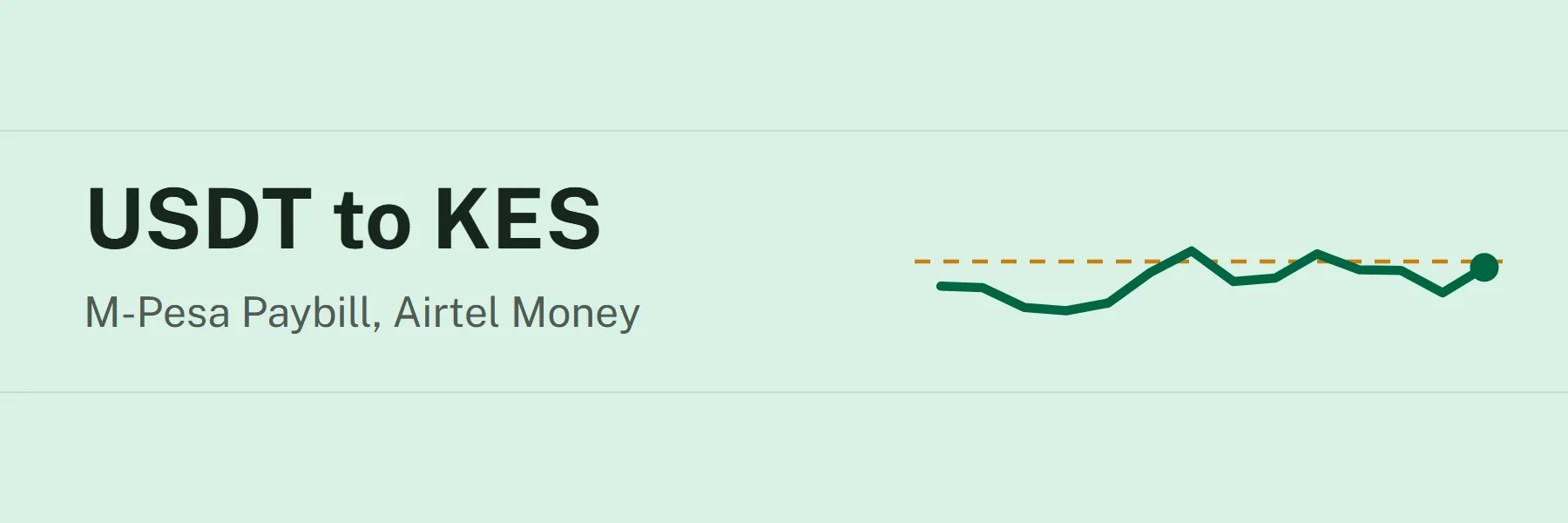
On Binance P2P you pay another user in shillings, usually with M-Pesa, while Binance holds their USDT in escrow; it's released to you once they see the money. Open P2P, choose Buy, USDT and KES, filter by M-Pesa, skip past any Promoted Ad to the ordinary list, pick a seller with a long record, pay the exact amount, then tap Transferred, Notify Seller. On 6 October 2026 the best price from reliable sellers was KSh 129.29, within half a shilling of the dollar rate; the live USDT to KES page shows where it is now.
M-Pesa Paybill or M-Pesa send money?
Binance lists both, and they work differently:
- M-Pesa Paybill: you pay a business number with the account reference shown in the order, so the payment arrives with a clear reference.
- M-Pesa (send money): a person-to-person transfer to a phone number. The name M-Pesa shows you before you confirm should match the seller's name on Binance.
- Airtel Money and banks such as Equity Bank: useful above M-Pesa's transaction limits. On 6 October 2026 Airtel Money was about one shilling dearer than M-Pesa; bank transfer matched it.
Binance P2P requirements in Kenya
A Binance account with identity verification finished (our sign-up guide walks through it) and an M-Pesa line registered in your own name. Sellers are told to refuse payments from a name that doesn't match the Binance account. If you're opening the account now, note that a referral code can only be added during sign-up, not afterwards.
Buying USDT with M-Pesa on the Binance app
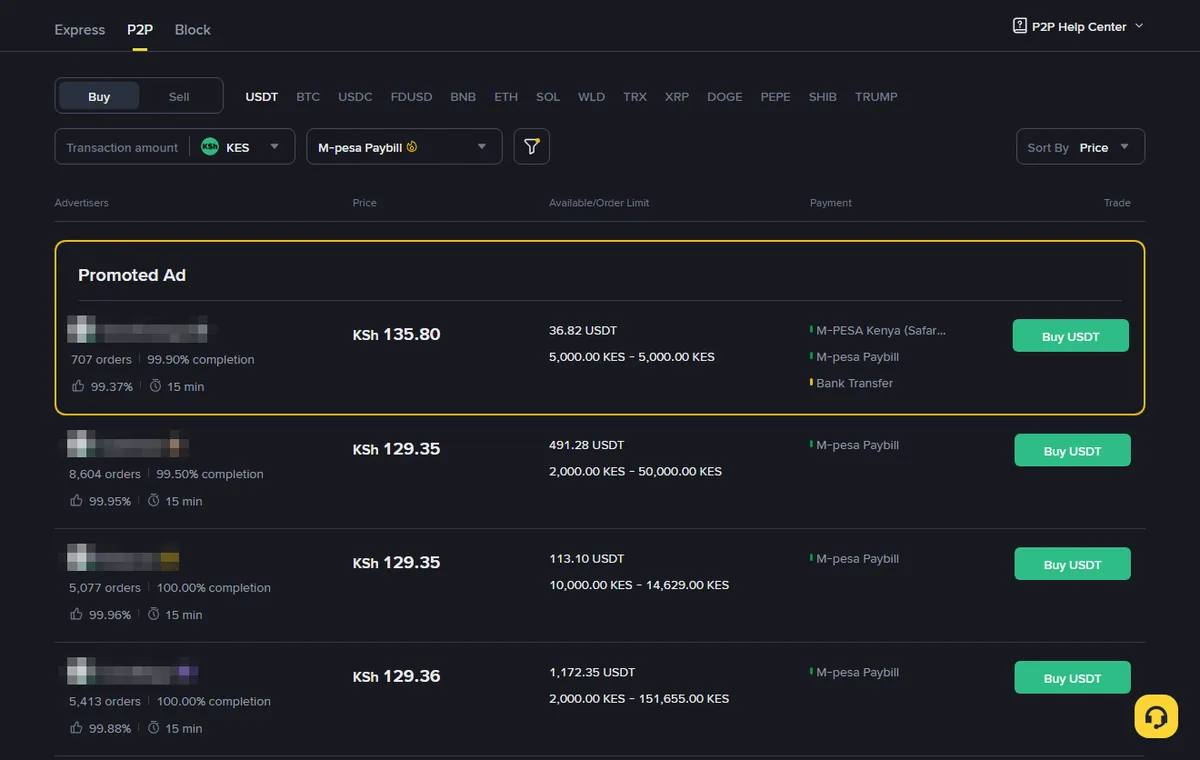
- In the Binance app, tap Add Funds, then P2P Trading (on the website, open P2P). Choose Buy, USDT, KES, and filter by M-Pesa or your method.
- Look below the Promoted Ad box. That slot is a paid placement, not a ranking by price.
- Choose a seller with a long record: a high order count and a completion rate close to 100%. Make sure your amount is within their limits.
- Place the order. The USDT is now in escrow.
- Pay the exact amount to the number or Paybill shown in the order. For Paybill, use the account reference the order shows.
- After the M-Pesa confirmation message arrives, tap Transferred, Notify Seller. Tapping it before paying breaks Binance's P2P rules and can get the account suspended.
- The seller releases, and the USDT appears in your Spot account. Older guides say the Funding wallet: since 29 September 2026 Binance has been moving crypto out of Funding into Spot.
If the timer runs out after you've paid and nothing is released, open an appeal from the order and attach the M-Pesa confirmation. What to upload and what support decides are in how to appeal a Binance P2P order. Don't cancel an order you've already paid: cancelling returns the escrowed USDT to the seller, and three cancellations in a day block buying until the next day.
How Binance P2P scams usually start
Our live page only counts advertisers with at least 30 completed orders in the last 30 days and a completion rate of 95% or more. On 25 September 2026 the two highest offers to buy USDT from Kenyan sellers came from accounts with 4 orders and none, about four shillings above the market. A very high bid from a near-new account is how many P2P scams start: the payment you receive can be reversed or come from a stolen line.
When selling, check your M-Pesa balance yourself before releasing; never rely on a forwarded SMS or screenshot.
What Kenya's VASP Act 2025 changes for P2P users
Kenya's Virtual Asset Service Providers Act came into force on 4 November 2025, and its regulations on 22 July 2026. Providers already serving Kenyans have until early November 2026 to comply and be licensed by the Capital Markets Authority or the Central Bank of Kenya. Since July 2025 a 10% excise duty applies to the fees crypto platforms charge, replacing the old 3% digital asset tax. How gains are taxed for individuals is less clear; our Kenya crypto tax page sets out what the law says.